Blog

  • First feedback on my app

    My idea for building a calisthenics app was to show it to people whom I train with and get their feedback.

    So it works.

    Currently, when I’m writing this post, my app is available only on iOS, so I haven’t promoted it widely yet. But when I use it in the gym, people are asking me about the app.

    So recently I was doing some exercises with short breaks. The idea is to do 10+ reps in a short time, so to track the time between the sets, I had a stop-timer on my app counting laps. Normally, after I was done, I would log all sets into the app.

    And my friend asked, why do you use the phone’s timer if you have the app?

    So it clicked the idea to add it to the first update of the app.

    Previously, I decided to leave my own feedback for later and first implement what other people suggest. And now I think I got the first real feedback, even though it solved my user need.

    So version 1.1.0 of HiBar will soon be available on the App Store.
  • Lovable vs Claude Code: an honest take from someone who used both

    I heard that Claude Code is an amazing tool, but for 2 months it took me behind. Imagine that you used to work with only one co-founder, and now you have to orchestrate the whole team and make sure nothing is missing. That’s how Claude Code feels when switching from Lovable.

    (more…)
  • Product Notes#2: Getting an App Ready for Feedback

    Over the next two weeks of vibe-coding the calisthenics app, I completed three additional screens:

    1. Combos – where users can learn complex skills and capture their achievements
    2. Timeline – showing exercise achievements and a weekly summary
    3. Spots – a global map of places where you can train

    Tweaking the Spots feature turned out to be the most challenging part. It required integration with a third-party mapping service and depended heavily on browser permissions.

    While everything worked fine on the desktop, I couldn’t test the Geolocation features properly without a secure context (HTTPS) on mobile. That made it difficult to properly test the app while staying in Lovable’s preview mode.

    Another downside of preview mode was that, even though I was building a mobile-first experience, the browser address bar was still visible and took up valuable screen space.

    At that point, it became clear that I needed to migrate the app to a different setup.

    (more…)
  • Product Notes #1: Why I Started Building a Calisthenics App

    I recently started building my first app.

    With the current progress in AI tools (as for the late 2025), building apps from scratch has become surprisingly accessible. For someone like me, who has always had a lot of ideas, experimenting with vibe-coding tools feels like an ideal workflow for prototyping and learning.

    Why I started building this app

    There were a few clear reasons:

    1. I practice calisthenics and wanted a convenient way to track my progress.
    2. Calisthenics is a very accessible sport. You can find street workout spots in most cities, and when traveling it’s nice to explore new places to train (and potentially meet new people).
    3. Most importantly, I wanted hands-on experience building and launching a product from scratch, not just managing one.

    Why build a new app at all?

    (more…)
  • Continuous Discovery Habits: Inspiring but Practical

    The first impression I had reading Teresa Torres’ Continuous Discovery Habits is that it’s inspiring. But what makes it valuable is how practical it feels once you get into it.

    Teresa Torres isn’t just telling you to build products around customer needs. She gives you a set of repeatable techniques, habits you can integrate into your work right away.

    Here are a few that really stuck with me:

    1. Story Mapping

    (more…)
  • What Inspired Gets Right and Where It Left Me Wanting More

    You’ll often find Inspired sitting at the top of product management reading lists.

    It took me a while to get to it, but I finally did.

    The book doesn’t dive deep into specific techniques or frameworks. Instead, it offers a broad view of how strong product companies operate.

    (more…)
  • What Web 3 Was

    Most people associate Web 3 with blockchain — crypto wallets, NFTs, DAOs. That kind of thing.

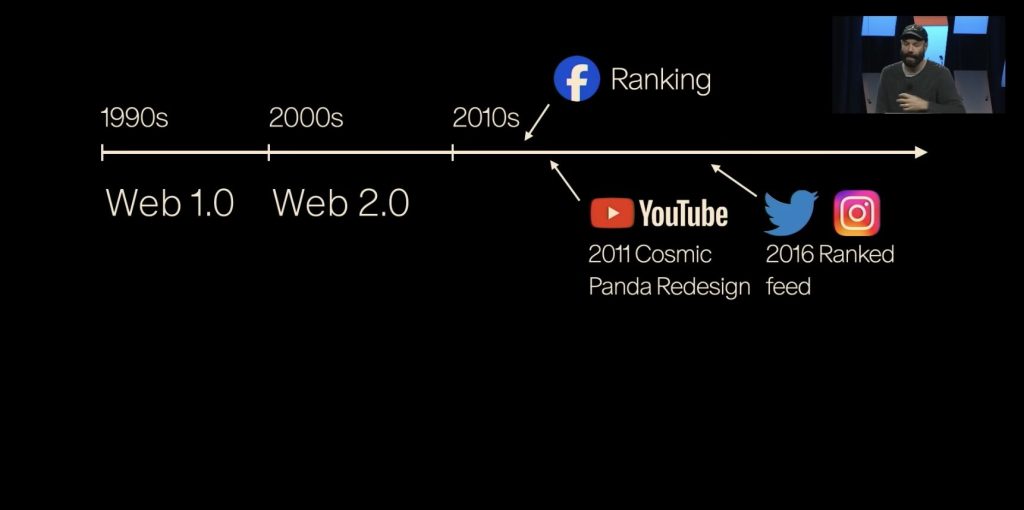
    But there’s another idea I keep coming back to — something Jack Conte (CEO of Patreon) said in his YouTube talk:

    “The algorithm changed everything. It became more important than followers.”

    You probably remember the moment when your favorite social media app introduced a For You tab.

    (more…)
  • How Platforms Shape the Way We Think

    In his book Stolen Focus, Johann Hari shares an interesting idea:

    “Every time a new medium comes along—whether it’s the invention of the printed book, or TV, or Twitter—it makes you see things differently.”

    And that’s something we can clearly see over time. The way we communicate on different platforms changes — not just because of the cultural shift, but because of the features that these platforms introduce.

    (more…)