Most people associate Web 3 with blockchain — crypto wallets, NFTs, DAOs. That kind of thing.
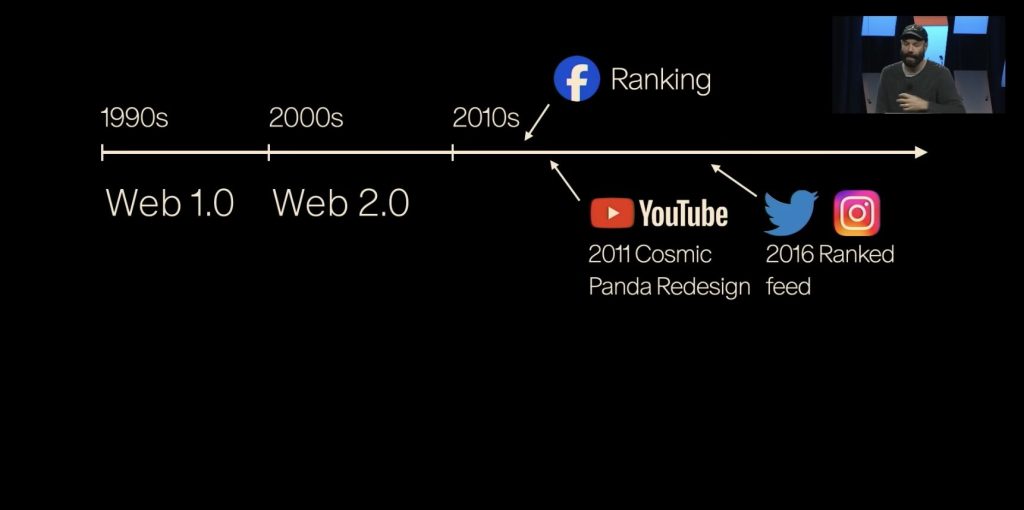
But there’s another idea I keep coming back to — something Jack Conte (CEO of Patreon) said in his YouTube talk:
“The algorithm changed everything. It became more important than followers.”
You probably remember the moment when your favorite social media app introduced a For You tab.
Your feed stopped being about who you followed — and started being about what the system thought you’d engage with.
That change didn’t go unnoticed — and it reshaped the Internet more deeply than most blockchain tools ever did.
Think about it:
– How many of your friends scroll algorithmic feeds every day?
– And how many actually use blockchain-based anything?
Now, two interesting directions are forming:
1. Platforms like Bluesky or Substack, where you can build (or at least tune) your own feed or choose the content you want to get — a return to pre-algorithm control.
2. And another trend that’s gaining momentum — the move toward an AI agent web, recently articulated at Microsoft Build 2025, where assistants navigate, summarize, and even act across the internet for us.
What’s coming next is hard to predict.
But here’s something worth thinking about:
What will be the role of the individual author in this new Internet?
Will they become sources for AI agents to learn from?
Or will we see new types of platforms where authorship is protected and verified — maybe with some form of identity check?
Maybe that’s where blockchain comes back into the picture.
Not as Web 3 — but as a building block of whatever Web 4 becomes.
Leave a Reply